
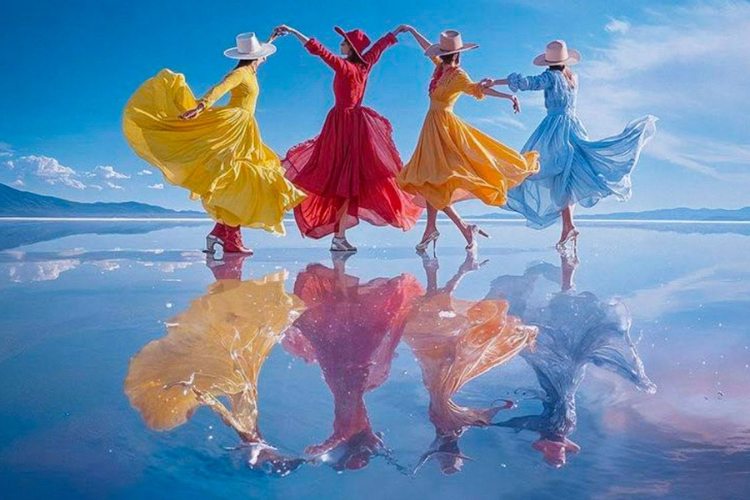
When did you stop dancing in your kitchen?
Not metaphorically. Literally. When was the last time you moved your body simply because a song made you feel alive? When did you last laugh so hard your stomach hurt? When did you last do something purely because it brought you joy—with no productive outcome, no one watching, no box to check?
If you’re struggling to remember, you’re not alone.
Somewhere along the journey of building careers, raising families, managing households, and meeting endless obligations, many of us received an unspoken message: Fun is frivolous. Play is for people who’ve earned it. Joy is what you get to experience after everything else is done.
Except everything is never done. The to-do list regenerates overnight. The responsibilities multiply. And joy? Joy gets pushed further and further down the priority list until it disappears entirely from view.
This week, we’re challenging that belief system. We’re dismantling the programming that turned you into a productivity machine and disconnected you from one of the most powerful forces in human experience: pure, unapologetic joy.
The Lie We’ve Been Living
Let’s be honest about the belief system many of us absorbed:
A full calendar equals a meaningful life. Busy equals important. Productive equals worthy. And rest—or heaven forbid, play—equals lazy.
We wear exhaustion like a badge of honor. We apologize for taking time off. We feel guilty watching a sunset when we could be answering emails. We’ve internalized the message that our value lies in our output, not in our aliveness.
But here’s what that belief system costs us: our vitality, our creativity, our presence, our health, our relationships, and our joy.
The irony? The very thing we’ve been sacrificing—joy—is actually the fuel that makes everything else sustainable.
What Joy Actually Does to Your Brain and Body
This isn’t just philosophical feel-good language. The science is clear: joy is medicine.
When you experience genuine joy—the kind that comes from play, laughter, creative expression, or moments of pure presence—your brain releases a cascade of neurochemicals including dopamine, serotonin, and endorphins. These don’t just make you feel good temporarily. They:
- Reduce cortisol and other stress hormones
- Strengthen your immune system
- Improve cognitive function and creativity
- Enhance emotional resilience
- Increase longevity and quality of life
- Deepen connection with others
In her groundbreaking book Joyful: The Surprising Power of Ordinary Things to Create Extraordinary Happiness, designer and researcher Ingrid Fetell Lee explores the neuroscience behind joy and discovers something remarkable: joy isn’t just an emotional state we stumble upon randomly. It’s something we can intentionally cultivate through our choices, our environments, and our attention.
Lee identifies what she calls the “aesthetics of joy”—universal elements that trigger joy responses in our brains. Things like bright colors, circular shapes, abundance, light, and playful elements aren’t just pretty—they’re neurologically wired to make us feel more alive. Think about how you feel when you see a field of wildflowers, colorful balloons, or sunlight streaming through a window. That lift in your spirit? That’s not frivolous. That’s your nervous system responding to joy cues.
Joy isn’t a luxury that weakens you. It’s a biological necessity that strengthens you.
Think about the last time you felt truly joyful. Didn’t you have more energy afterward? Were you more patient, more creative, more able to handle challenges? That’s not a coincidence. Joy literally creates the energetic capacity for everything else in your life.
Yet we’ve been treating it like dessert—something you only get after you’ve eaten all your vegetables. What if joy is actually the main course?
The Permission You’ve Been Waiting For
You don’t need anyone’s permission to experience joy. You don’t need to earn it. You don’t need to wait for retirement, for your children to grow up, to lose weight, or to reach the next goal.
You’re allowed to experience joy right now, exactly as you are, with everything still on your to-do list.
Let me say that again: You may prioritize joy, not someday, but today.
The woman who plays, who laughs, who follows her curiosity, who makes time for activities that light her up—she’s not being irresponsible. She’s being wise. She understands that joy isn’t the reward for a life well-lived; it’s the fuel for a life well-lived.
Reconnecting With Your Joy Triggers
So what brings you joy? Not what’s supposed to bring you joy. Not what brings other people joy. What makes you feel fully alive?
Lee’s research reveals that while there are universal joy triggers, each of us responds differently to distinct elements. For some women, it’s music—singing in the car, dancing in the living room, losing themselves in a melody. For others, it’s being in nature, feeling sunlight on their faces, listening to birdsong. Some find joy in creative expression—painting, writing, cooking, gardening. Others light up in connection—deep conversations, shared laughter, quality time with people they love.
One of Lee’s most powerful insights is that joy often hides in the ordinary. It’s not always about grand vacations or major life events. Sometimes the most profound joy comes from:
- Fresh flowers on your kitchen table
- Wrapping yourself in a cozy, colorful blanket
- Opening your curtains to let natural light flood your space
- Surrounding yourself with objects that make you smile
- Creating small pockets of beauty in your everyday environment
Your joy triggers are as unique as your fingerprints. And they may have changed over the years.
What made you lose track of time as a child? What activities make you forget to check your phone? When do you feel most like yourself—free, alive, present?
These aren’t trivial questions. These are breadcrumbs leading you back to your essential self.
The Joy Audit: Your Week of Awakening
Here’s your invitation for the week ahead: Track your energy.
For the next seven days, notice which activities energize you and which ones deplete you. Not which tasks are “important” or “productive,” but which one’s make you feel more alive versus more exhausted.
But don’t stop there. Following Lee’s approach, also notice your environmental joy triggers:
- What colors make you feel uplifted?
- What spaces in your home or community make you feel most alive?
- What sensory experiences (textures, scents, sounds) bring you pleasure?
- What small changes to your immediate environment might increase your daily joy?
You might discover that:
- The obligation you’ve been dreading actually brings unexpected joy
- The “should” you’ve been forcing yourself to do drains you completely
- There are pockets of joy available in ordinary moments—if you’re present enough to notice them
- You have been giving your most joyful hours to tasks that you could delegate, eliminate, or do differently.
- Simple environmental shifts (adding a splash of color, rearranging furniture to capture light, displaying meaningful objects) could transform your daily experience
As you track, ask yourself: Where did obligation squeeze out joy? Where could I reclaim even 15 minutes daily for something that genuinely lights me up?
Starting Small, Feeling Big
You don’t need to overhaul your entire life this week. You don’t need to quit your job, book a trip to Bali, or make any dramatic declarations.
Start with 10 minutes and one small environmental shift.
Ten minutes of something that brings you joy. Not productivity disguised as self-care. Not exercising you force yourself through. Not scrolling social media to numb out. But genuine, embodied, present joy.
Maybe it’s:
- Putting on your favorite song and moving your body however it wants to move
- Stepping outside and really noticing the sky, the sounds, the feeling of air on your skin
- Calling someone who makes you laugh
- Pulling out art supplies and creating something with zero expectations
- Reading for pleasure, not improvement
- Playing with a pet or a child with full presence
- Trying something you used to love but abandoned years ago
And one small shift to invite more joy into your everyday environment:
- Add fresh flowers or a vibrant plant to your most-used space
- Move a chair to capture the morning sunlight
- Display photos or objects that make you smile
- Introduce a pop of your favorite color
- Clear clutter from one surface to create breathing room
- Open windows to invite in fresh air and natural sounds
Whatever you choose, give yourself those 10 minutes and that one small change without guilt, without justification, without apologizing.
Here’s the truth: The woman who prioritizes joy isn’t escaping responsibility. She’s claiming responsibility for her own aliveness.
Your Next Chapter Starts Here
You’re not at this stage of life simply to maintain. You’re here to flourish.
The next chapter isn’t about doing more—it’s about being more fully alive. And that requires joy, not as an afterthought, but as a foundation.
What would change if you viewed joy not as a selfish indulgence, but as essential fuel for the life you’re creating? What would open up if you gave yourself permission to play again?
You’ve spent decades caring for others, meeting obligations, checking boxes. You’ve earned this moment. But more importantly, you don’t need to earn it. Joy is your birthright, available right now.
So here’s my challenge to you: This week, reclaim 10 minutes a day for pure, unapologetic joy. Make one small change to invite more joy into your environment. Notice what shifts. Notice how it feels. Notice what becomes possible when you stop waiting for permission and simply give it to yourself.
The kitchen is waiting. The music is playing. And you—yes, you—may dance.