A Coaching Conversation with Joanne
Last week we met Joanne.
Retired principal. Thirty-five years of managing schools, navigating crises, holding steady under pressure that would have broken most people. Not someone who collapses. Not someone who runs from discomfort.
And yet — a half-second look from a woman across a ceramics studio sent her home and kept her away for two weeks. She was, by her own account, still a little puzzled by herself.
We left Joanne having named what happened: the eyebrow wasn’t the wound. The part of herself that agreed with it was. The thought underneath wasn’t she was rude. It was, what if she’s right — what if I don’t belong here?
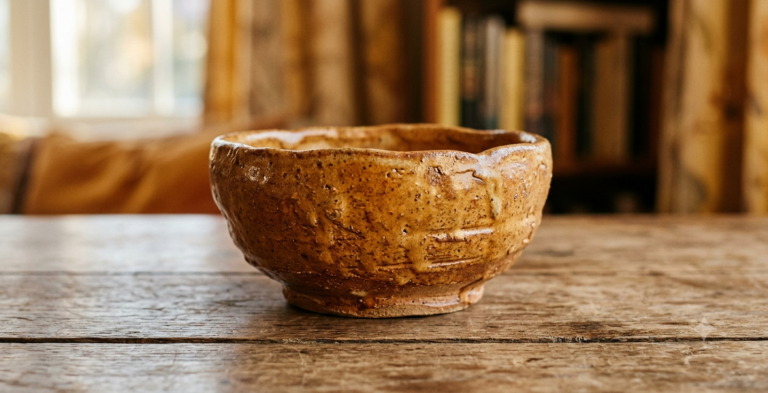
She also went back. Her third bowl was her best one. It’s on the mantle now.
But there’s a question that doesn’t get resolved just by going back. And it’s the one that matters most as we close this month’s series on the Visibility Paradox.
Why did a single look from a stranger have that much power in the first place?
A few weeks after returning to the class, Joanne brought this question to a coaching session. What follows is a reconstruction of that conversation — with her permission, and with identifying details adjusted.
The Conversation
Coach: What’s on your mind today?
Joanne: Something that’s been nagging at me. I’ve been thinking about the ceramics class. You know, I went back. And I’m glad I did. But I keep coming back to the original incident, and I still don’t fully understand why it hit me the way it did. I’ve handled much harder things without flinching.
Coach: When you say it hit you, what did that actually look like for you?
Joanne: I went home. I didn’t go back for two weeks. I told myself I was busy, but that wasn’t really it. Something just… closed down.
Coach: What closed down?
Joanne: [pause] The desire to go, I suppose. The part of me that had been excited about it. It just went quiet.
Coach: And what do you think happened to that part?
Joanne: I think I scared it off. [pause] Or she did. I’m not sure which.
Coach: Can you tell me exactly what happened — just the facts of it?
Joanne: A woman in the class looked at my bowl. Her expression — it was half a second, maybe less. The kind of face you make when something isn’t quite right. And then she looked away.
Coach: That’s the whole thing? A facial expression, less than a second?
Joanne: When you say it like that, it sounds ridiculous.
Coach: I’m not saying it’s ridiculous. I’m just checking — is there more to the circumstance, or is that it?
Joanne: That’s it. She didn’t say a word. She just looked.
Coach: And what did you make that mean?
Joanne: [quietly] That my bowl wasn’t good. That I was the older woman who didn’t know what she was doing. That I was out of place.
Coach: Out of place. Stay with that one. What does it mean to be out of place in that room?
Joanne: That I don’t belong there. That it’s not for me.
Coach: What’s the “it” — is it ceramics specifically, or something broader?
Joanne: [long pause] Something broader, I think. Being a beginner. Being in a room where I don’t know what I’m doing. That’s what’s not for me.
Coach: Why isn’t it for you?
Joanne: Because — [stops] I don’t know. It always has been, I suppose. Being the person who knows.
Coach: Say more about that.
Joanne: My whole career, I was the one people came to. The one who had the answer, or at least the composure. Even when I didn’t know the answer, I knew how to hold the room while we figured it out. That was who I was.
Coach: And in the ceramics class?
Joanne: I’m not that person. I’m the one with the lopsided bowl who doesn’t know how to center the clay. [laughs a little]
Coach: What’s it like to be her — the one with the lopsided bowl?
Joanne: Uncomfortable. More than I expected.
Coach: What’s underneath the discomfort?
Joanne: [pause] Exposure. Like — in a room where I’m competent, there’s a layer of protection. My track record, my title, my credibility. They go ahead of me into the room. In ceramics, none of that walks in with me. I’m just a woman who doesn’t know what she’s doing yet.
Coach: When you put it that way — “yet” — what do you notice?
Joanne: [pause] That I slipped in an assumption. That I will know, eventually. That this is temporary.
Coach: Is that true — that not-knowing-yet is temporary?
Joanne: Yes. If I keep going.
Coach: So the woman’s expression was about your bowl in week two. And you’re telling yourself it’s information about whether you belong. Are those the same thing?
Joanne: [quietly] No. No, they really aren’t.
Coach: What do you notice in your body right now?
Joanne: Something loosens. Like — oh. Like the thing that’s been sitting on my chest just shifted a little.
Coach: Stay with that for a moment.
[pause]
Coach: What shifted?
Joanne: I think I’ve been treating her expression as a verdict. And it wasn’t a verdict — it was just a reaction. Someone’s reaction to a bowl. And I turned it into a ruling about whether I’m allowed to be there.
Coach: Allowed by whom?
Joanne: [long pause] That’s a good question. Not by her — she doesn’t have that authority. [pause] I think I was hoping to bypass the awkward part. The beginner part. I wanted to already be good at it.
Coach: And when the bowl proved you weren’t yet — what did that mean?
Joanne: That I’d gotten it wrong. That I should have stayed in rooms where I already know what I’m doing.
Coach: Is that what you want? To only be in rooms where you already know what you’re doing?
Joanne: [long pause] No. God, no. That sounds like a very small life.
Coach: What do you want instead?
Joanne: I want to be in that studio. I want to be bad at it for a while and get better. I want to be someone who is still becoming things at 67. That feels important.
Coach: Why does that feel important?
Joanne: Because the alternative is — what? Staying inside what I’ve already mastered? I spent thirty-five years being competent. I don’t think I want that to be the whole story.
Coach: What would you call the chapter that starts now?
Joanne: [smiles] The part where I let myself be a beginner.
What Joanne’s Conversation Points To
Joanne didn’t need someone to tell her the woman’s expression didn’t matter. She needed to slow down enough to see what she’d done with it, and to notice that the verdict she’d handed down on herself was more severe than any stranger could have issued.
This is what coaching makes visible: not a new truth, but the truth we’ve been living underneath our reactions, finally brought into the light where we can look at it clearly.
What she found underneath the eyebrow was a belief she hadn’t examined: that not-knowing-yet was the same as not-belonging. That exposure without credentials was something to escape rather than move through. That at 67, she should be past the phase where things are hard and awkward and new.
She isn’t past that phase. None of us is. And the research we’ve explored all month supports what Joanne found in that room: women who remain in motion, who keep entering rooms where they don’t yet know what they’re doing, who keep offering their presence and their voice and their lopsided bowls age fundamentally differently than women who settle into what’s already known. Dr. Julianne Holt-Lunstad’s work on social engagement and longevity, Dr. Carol Ryff’s research on purpose-driven aging, Dr. Becca Levy’s findings on the protective power of positive self-perception — they all point in the same direction. Remaining visible, remaining a beginner at something, remaining willing to be seen in a room where you don’t yet have credentials these aren’t indulgences. They are some of the most protective choices you can make.
Visibility isn’t vanity. It’s a longevity strategy. And sometimes it looks like a woman with a lopsided bowl, going back anyway.
That bowl is on the mantel. The third one is better. There will be more.
For You, Before We Close the Month
This has been our August series — four weeks inside the Visibility Paradox, from naming the Invisibility Script to sitting with Joanne in a coaching conversation about a half-second look that turned out to be about so much more.
If you take one thing into September, let it be this: the moments that stop you are almost never about what they appear to be about. The eyebrow, the vague answer at North Market, the letter that stayed in drafts underneath each one is a belief worth examining. A thought that was taken as truth. A verdict that was never yours to hand down.
You can bring those moments into the light. You can get curious about them instead of just acting on them. That’s the work — and it’s available to you at 67, at 59, at 64, at every age that matters.
It always starts with the noticing — that’s enough.