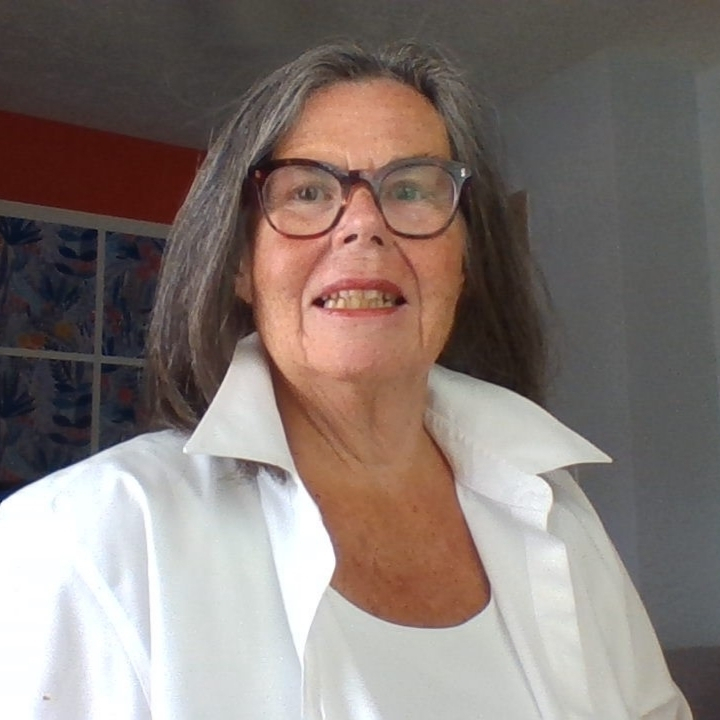

Margaret spent Thursday afternoon at Highbanks with her nine-year-old granddaughter. They found a bench near the water and, for nearly twenty minutes, watched a great blue heron stand perfectly still in the shallows. Neither of them said much. When the heron finally lifted off, her granddaughter gasped and grabbed her arm.
It was one of the loveliest hours Margaret could remember.
On the drive home, she caught herself rehearsing an apology. To whom she wasn’t sure. I really should have gotten the gutters scheduled. I didn’t even make it to the grocery store. By dinner, she quietly considered the afternoon as “wasted.”
Margaret has always been careful with resources. Money, energy, leftovers, time. For most of her life, time spent had to show a return. A heron, however magnificent, didn’t count.
When Rest Feels Like a Debt
If valuing “being” feels a little indulgent to you, even irresponsible, there’s a reason. For decades, you were the one who held things together. You measured your days by what you accomplished, and many relied on you to accomplish it.
So it makes sense that unstructured time can feel less like a gift and more like a debt you’ll have to pay back later.
Here’s your permission: you don’t have to stop doing. Doing is still welcome here. You can still volunteer, organize, build, and finish things. It just doesn’t have to be the only thing that counts.
This isn’t about choosing being over doing. It’s being and doing; contribution and rest; growth and presence. A full life has room for both, and in this chapter, the balance can finally shift.
What the Longest-Lived Communities Measure
Here’s what makes this more than a nice idea.
Dan Buettner and his team spent years studying communities where unusually high numbers of people live into their 90s and beyond, places they called Blue Zones. What stands out in their observations isn’t achievement. What stands out is how people organise their ordinary lives around purpose and belonging.
In Okinawa, older adults speak of ikigai, a reason for getting up in the morning. Many belong to a moai, a small circle of friends who support one another for life. In Costa Rica’s Nicoya Peninsula, people describe a plan de vida, a reason to live. Neither concept depends on a title or a paycheck.
Women researchers have added powerful evidence behind these observations:
Purpose. Dr. Patricia Boyle and colleagues at Rush University found that older adults with a greater sense of purpose in life had a lower risk of death over the study period and a lower risk of developing Alzheimer’s disease.
Relationship. Dr. Julianne Holt-Lunstad’s analysis of nearly 150 studies found that people with stronger social relationships had about a 50 percent greater likelihood of survival. Connection isn’t a luxury. It’s protective.
Meaning. Stanford’s Dr. Laura Carstensen has shown that as we sense our time horizons shortening, we naturally prioritize emotionally meaningful experiences. And emotional wellbeing often improves with age. That’s a powerful counterpoint to the idea that later life is a series of losses.
The stress side matters too. Dr. Elissa Epel’s research links chronic stress to accelerated cellular aging. A life spent constantly proving yourself carries a physical cost.
In other words, an afternoon watching a heron with someone you love isn’t a detour from a good life. It may be one of its key ingredients.
Four Ways to Measure a Good Day
Drawing on this research, here are four domains you can begin to notice and value:
Presence. Being fully where you are. Tasting your coffee. Noticing the light on the trees along the Olentangy Trail. On an ordinary Wednesday, it looks like putting the phone down for a conversation.
Relationship. Time with people who matter, and the small acts that keep connection alive. On an ordinary Wednesday, it looks like a phone call you didn’t have to make.
Contribution. Giving something of yourself, whether it’s large or small. On an ordinary Wednesday, it looks like dropping off soup for a neighbor or mentoring someone newer to retirement.
Growth. Learning for the joy of it, not for a credential. On an ordinary Wednesday, it might be a course at OLLI at Ohio State, a new recipe, or finally understanding how your phone’s camera works.
Notice that none of these requires a finished product. All of them count.
Try This: Arrive in the Room
Being is a skill, and like any skill, it gets easier with practice. This takes about two minutes.
Feel your feet on the floor. Let your weight settle into your chair. Take three slow breaths, letting each exhale run a little longer than the inhale. Then name three things you can see, slowly, as if you were describing them to someone who isn’t there.
That’s it. You’ve just practiced being. No outcome required.
The Fulfillment Wheel
Draw a circle and divide it into four sections: Presence, Relationship, Contribution, Growth.
For each one, ask yourself: How satisfied do I feel with this part of my life right now? Rate it from 1 to 10. Then shade each section to match.
The key word is satisfied. You’re not measuring how much you did. You’re noticing how full each area feels.
When Margaret tried it, Relationship came out high. Presence came out surprisingly low. “I’m there,” she said, “but I’m usually somewhere else in my head, making a list.” That was useful information, not a failing grade.
Your Next Step
On your own: Fill in your Fulfillment Wheel and notice which area feels most nourished and which feels thin.
At your own pace: Or simply let one day this week count with no need to prove it did.